How to Create a Beautiful Deer-Resistant Summer Border
A deer-resistant garden does not have to look plain, stiff, or limited. In fact, some of the most beautiful summer borders are built around plants deer tend to avoid because of their fragrance, texture, or strong foliage. The key is to think like a designer first. Instead of choosing plants one by one, build a border that layers color, texture, fragrance, height, and movement from front to back.
Start with structure. Every great border needs a few steady anchor plants to give the garden shape even when flowers come and go. Boxwood, juniper, ornamental grasses, and compact flowering shrubs can help define the planting area while making the space feel intentional. In a sunny summer border, grasses are especially useful because they add height, softness, and motion when the breeze moves through the garden.
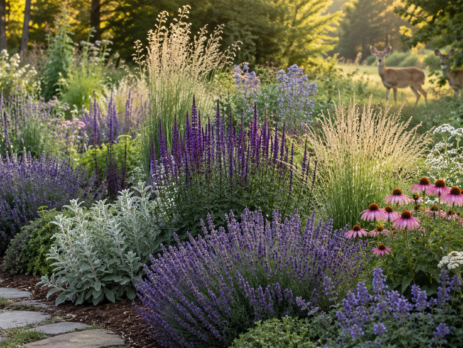
Next, bring in fragrance. Deer often avoid strongly scented plants, which makes lavender, catmint, salvia, bee balm, Russian sage, and herbs like thyme or rosemary useful design plants. These choices also help create a sensory garden for people, not just a defensive garden against deer. Plant fragrant varieties near the front of the border or along a walkway where you can enjoy them as you pass by.
Color should come in waves, not random spots. Try repeating groups of purple, blue, silver, white, and soft pink for a calm summer look, or add warmer tones with yarrow, coreopsis, and deer-resistant annuals for brighter seasonal impact. Repetition is what makes a border feel designed. A drift of catmint echoed by salvia, then balanced with silver foliage or airy grasses, will look more polished than a single plant of each variety.
Texture is just as important as bloom color. Fine grasses, ferny yarrow foliage, bold coneflower leaves, upright salvia spikes, and soft lavender mounds all create contrast. Even when one plant is between bloom cycles, the border still has interest because the foliage shapes are working together.
Finally, remember that deer-resistant does not mean deer-proof. Hungry deer may browse almost anything, especially during dry weather or when young plants are tender. For best results, combine smart plant choices with good spacing, healthy soil, consistent watering, and repellents where needed.
Visit Nunan’s to choose deer-resistant annuals, perennials, herbs, grasses, and shrubs that can help you create a summer border with color, movement, fragrance, and lasting seasonal beauty.
FAQ
What makes a plant deer-resistant?
Deer often avoid plants with strong fragrance, fuzzy or tough foliage, bitter flavor, or certain natural compounds. Lavender, catmint, salvia, Russian sage, ornamental grasses, and many herbs are common examples.
Is any plant completely deer-proof?
No plant is guaranteed deer-proof. Deer pressure changes depending on the season, food supply, weather, and local herd behavior.
What colors work well in a deer-resistant summer border?
Purples, blues, silvers, whites, and soft pinks create a cool, elegant look. For more energy, add yellow, orange, or red accents with plants deer tend to avoid.
Can I mix deer-resistant plants with plants deer like?
Yes, but place more vulnerable plants closer to the house, near high-traffic areas, or behind fragrant and textured plants that deer are less likely to browse.
When should I plant a summer border?
Late spring into early summer is a good time once the soil has warmed and the danger of frost has passed. Keep new plants watered while they establish.