Fall Lawn Repair: September’s Most Important Lawn Jobs
Summer can be hard on a New England lawn. Heat, drought, heavy foot traffic, insects, and weeds may leave behind thin areas, bare patches, or tired-looking grass. Fortunately, September offers some of the year’s best conditions for lawn repair.
Cooler air reduces stress on new grass, while soil remains warm enough to encourage fast germination and strong root development. Completing these important lawn projects now can produce a thicker, healthier lawn this fall—and give it a head start next spring.
Start by Evaluating Your Lawn
Walk through your property and note bare spots, compacted soil, weed problems, and areas where grass has become thin. Try to determine why the damage occurred before reseeding. Poor drainage, excessive shade, compacted soil, pet activity, insects, or improper watering may need to be addressed for the repair to last.
Rake away dead grass and loosen the surface of bare areas so new seed can make direct contact with the soil.
Seed Bare Areas
September is an excellent time to establish grass seed in Georgetown and surrounding North Shore communities. Select a quality seed mixture suited to the conditions in your yard. Sunny lawns, shaded areas, and high-traffic spaces may require different blends.
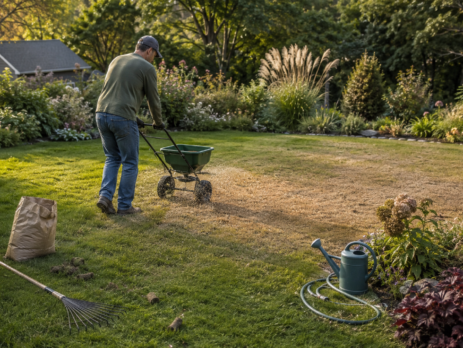
Spread the seed evenly, lightly rake it into the soil, and apply a thin covering of clean topsoil or seed-starting material if needed. Keep the area consistently moist with light watering until the seed germinates. Gradually transition to deeper, less frequent watering as the seedlings become established.
Overseed Thin Lawns
A lawn does not have to be completely bare to benefit from new seed. Overseeding introduces fresh grass into thinning areas, improves density, and helps the lawn compete more effectively with weeds.
For better seed-to-soil contact, mow the existing grass slightly shorter than usual, remove loose clippings and debris, and rake the surface before spreading seed. Avoid cutting the new grass until it is tall enough to be mowed without pulling young plants from the soil.
Aerate Compacted Soil
If water puddles on the surface, the soil feels hard, or the lawn receives frequent foot traffic, core aeration may help. Aeration removes small plugs of soil, allowing air, moisture, and nutrients to reach the root zone more easily.
Aeration and overseeding work especially well together. Seed can settle into the openings created by the aerator, where it has improved contact with moist soil. Leave the soil plugs on the lawn; they will break down naturally.
Feed for Stronger Roots
Fall fertilization supports root development and helps established grass recover from summer stress. Choose a lawn fertilizer appropriate for the season and your lawn’s needs. A soil test can help identify nutrient deficiencies and prevent unnecessary applications.
Always follow package directions, apply the product evenly, and avoid spreading fertilizer onto sidewalks, driveways, or near storm drains. Sweep any stray granules back onto the lawn.
Control Weeds Carefully
Healthy, dense turf is one of the best long-term defenses against weeds. Remove isolated weeds before they produce seed, but remember that some weed-control products can interfere with grass-seed germination.
If you plan to seed or overseed, check the herbicide label carefully. It may be better to establish the new grass first and address remaining weeds later in the fall or next season.
Repair the Cause, Not Just the Damage
New seed alone cannot correct every lawn problem. Thin grass beneath mature trees may need a more shade-tolerant seed mixture—or a transition to groundcovers or mulch. Frequently worn paths may require steppingstones. Areas damaged by drought will benefit from improved watering practices, while low spots may need better drainage or grading.
Matching the repair to the underlying problem will give you much better and longer-lasting results.
Let Nunan’s Help You Restore Your Lawn
Whether you are repairing a few bare patches or renovating a larger section of lawn, the team at Nunan Florist & Greenhouses can help you select the right grass seed, soil amendments, fertilizer, and tools for the job. Bring in photos or measurements of the area, and we can help you plan your September lawn project.
Fall Lawn Repair FAQs
When is the best time to seed a lawn in Massachusetts?
Late summer through early fall is generally ideal because the soil is warm, temperatures are cooler, and rainfall is often more dependable. Beginning early in September gives new grass valuable time to establish before colder weather arrives.
How often should newly planted grass seed be watered?
Keep the top layer of soil consistently moist with light, frequent watering. Do not allow the seedbed to dry out, but avoid creating puddles or washing seed away.
Can I fertilize and seed at the same time?
Yes, if you use a fertilizer labeled for new lawns or seed establishment. Follow the product directions carefully and avoid applying more than recommended.
Should I aerate before or after overseeding?
Aerate first and overseed immediately afterward. The openings help improve seed-to-soil contact and allow water and nutrients to reach the root zone.
Can I apply weed killer when I overseed?
Many conventional weed-control products can prevent or damage new seedlings. Read the label before applying anything, and ask the Nunan’s team for help choosing products compatible with your lawn-repair plan.