Build a Better Winter View From Inside the House
Evergreens, colorful bark, berries, and interesting plant shapes can turn an ordinary winter landscape into something worth looking at.
When the last autumn leaves fall, your garden doesn’t have to lose its appeal. In fact, winter offers an opportunity to appreciate a different kind of landscape beauty. Without colorful flowers and lush foliage competing for attention, the shapes, textures, and structure of plants become the stars of the show.
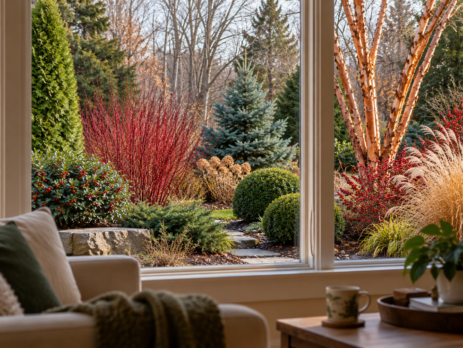
Here in New England, where we spend more time looking at our gardens through windows during the colder months, a thoughtfully planned winter landscape can make a remarkable difference. Whether you’re enjoying your morning coffee at the kitchen table or looking out from your living room, a few well-chosen plants can create an attractive view throughout the season.
Start With Evergreens for Year-Round Structure
Evergreens are the foundation of an attractive winter landscape. They provide dependable color, texture, and visual interest when deciduous plants have lost their leaves.
Consider mixing different evergreen shapes and foliage colors for a more interesting composition:
- Arborvitae: Upright varieties create attractive vertical accents and natural screening.
- Dwarf spruce: Compact forms add structure to foundation plantings and smaller gardens.
- Boxwood: Rounded or carefully maintained shapes provide definition along walkways and garden beds.
- Holly: Glossy green foliage and bright red berries make certain varieties especially appealing in winter.
For added interest, combine tall, narrow evergreens with lower, rounded varieties. The contrast creates depth and makes the landscape feel intentionally designed, even in January.
Add Color With Bark and Berries
Flowers aren’t the only way to introduce color into your landscape. Some plants become especially attractive after their leaves disappear.
Red twig dogwood is a wonderful example. Its brilliant red stems stand out against snow, evergreens, and the muted colors of winter. Yellow-twig varieties offer a different but equally striking effect.
Winterberry holly is another excellent choice for Massachusetts gardens. This deciduous native holly loses its leaves in autumn, revealing branches covered with bright berries that can persist into winter. Most varieties require a compatible male pollinator nearby for berry production.
Ornamental trees such as paperbark maple and river birch provide beautiful peeling or exfoliating bark that becomes more noticeable during the winter months.
These plants work particularly well where they can be viewed against a contrasting background.
Let Plant Shapes Do the Decorating
Winter is when the natural architecture of your garden becomes most apparent.
A gracefully branching Japanese maple, the horizontal layers of a mature dogwood, or the distinctive silhouette of a weeping ornamental tree can become a focal point without a single leaf.
Ornamental grasses also contribute movement and texture. Their dried seed heads and golden stems catch the low winter sunlight and sway gently in the breeze.
Consider leaving some ornamental grasses and perennial seed heads standing through winter rather than cutting everything back in autumn. In