Fall Gardening for Wildlife: A Little Less Cleanup, A Lot More Life
A few simple choices this fall can help birds, pollinators, and beneficial insects find food and shelter throughout the colder months.
As the growing season winds down, it’s tempting to tidy up every corner of the garden. But before you cut back those perennials, rake away every leaf, or remove the last fading flowers, consider who might be depending on your landscape. Your garden can provide valuable food, shelter, and winter habitat for birds, butterflies, bees, and other beneficial wildlife.
The good news? Creating a wildlife-friendly fall garden often means doing a little less work, not more. Here are five simple ways to make your landscape more welcoming this fall and into winter.
1. Leave Some Seed Heads Standing
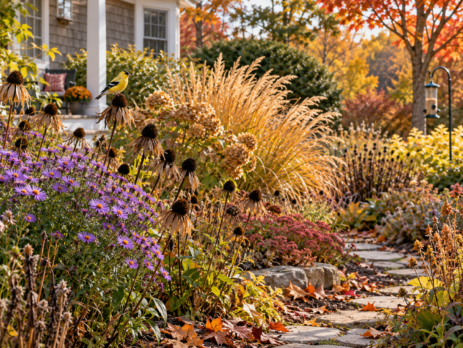
Those fading flowers may not look as colorful as they did in August, but many provide an important food source for birds.
Coneflowers, black-eyed Susans, asters, and ornamental grasses produce seeds that goldfinches, chickadees, and other birds can enjoy through fall and winter.
Rather than cutting everything back, leave a few patches of perennials standing. Their dried stems and seed heads also add texture and interest to the winter landscape.
2. Let the Leaves Work for You
Fallen leaves are more than yard debris. They’re nature’s winter blanket, protecting soil, insulating plant roots, and providing shelter for beneficial insects.
Many butterflies, moths, and other insects spend the winter in leaf litter. Removing every leaf can eliminate important overwintering habitat.
Instead, rake leaves from lawns and walkways into garden beds or beneath shrubs, where they can gradually break down and enrich the soil. Keep heavy layers away from plant crowns and avoid piling leaves against tree trunks.
3. Think About Food and Shelter
Trees and shrubs that produce berries, seeds, and protective cover can make a tremendous difference for wildlife.
Consider adding native plants suited to your landscape, such as winterberry holly, serviceberry, viburnum, or native dogwoods. These plants can provide seasonal food, nesting opportunities, and protection from cold weather.
Evergreens are especially valuable because their dense branches offer birds shelter from winter winds and predators.
Fall is also a good time to look around your yard and identify places where additional shrubs or small trees could create a more welcoming habitat next year.
4. Give Pollinators a Place to Spend Winter
Not every bee lives in a hive. Many native bees nest in hollow stems, underground tunnels, or small cavities in wood.
Leaving some perennial stems standing until spring can help protect these beneficial pollinators. Undisturbed soil, fallen leaves, and natural garden areas also provide important winter shelter.
If possible, designate a small section of your garden where nature can take its course. Even a modest wildlife corner can make a difference.
5. Provide Water and Keep Things Natural
Birds and other wildlife need water throughout the year, including during colder weather.
A shallow birdbath with fresh water can be a welcome resource. Clean it regularly, and consider a birdbath heater when freezing temperatures arrive.
Avoid unnecessary pesticide applications, especially in areas where beneficial insects may be sheltering. A healthy, diverse garden encourages natural balance and supports the creatures that help keep pests under control.
A Garden That’s Alive in Every Season
A wildlife-friendly garden doesn’t have to look messy or neglected. It can be thoughtfully maintained while still leaving room for nature.
A few standing perennials, a layer of leaves beneath the shrubs, and some berry-producing plants can turn an ordinary landscape into a valuable seasonal refuge.
At Nunan’s Garden Center in Georgetown, MA, we’re here to help you choose plants that bring beauty to your yard while supporting the birds, pollinators, and beneficial wildlife that make our gardens come alive.
Stop by and talk with our knowledgeable team about creating a landscape that’s beautiful, welcoming, and full of life throughout the seasons.
Frequently Asked Questions
Should I cut back all my perennials in the fall?
No. While diseased or heavily damaged foliage should be removed, many healthy perennial stems and seed heads can remain standing through winter to provide food and shelter for wildlife.
Is it okay to leave fallen leaves in garden beds?
Yes. A loose layer of leaves can protect soil, insulate roots, and shelter overwintering insects. Avoid thick, matted layers that smother low-growing plants.
What shrubs are good for birds in Massachusetts?
Native winterberry holly, serviceberry, and several native viburnums are excellent options. Choose species appropriate for your site, and remember that winterberry generally needs a compatible male plant nearby for berry production.
When should I clean up my garden in spring?
Wait until temperatures have warmed consistently and overwintering insects have had an opportunity to emerge. There isn’t one perfect calendar date, so consider local weather conditions and leave some habitat undisturbed where practical.