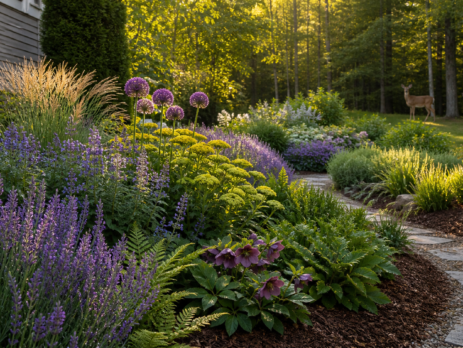
Deer-Resistant Gardens: What Actually Works in Your Area
Deer can turn a carefully planted garden into a salad bar overnight. In northern New England, especially around wooded neighborhoods, conservation land, and quiet residential areas, deer pressure is a real challenge. The good news is that you can still have a beautiful garden. The key is understanding what deer usually avoid, what they may still sample, and how to combine smart plant choices with practical protection.
Start With the Right Expectations
No plant is truly “deer-proof.” When deer are hungry enough, especially in winter or early spring, they may browse plants they normally ignore. A better goal is to build a deer-resistant garden using plants that are less appealing because of their scent, texture, taste, or toxicity.
Plants with fuzzy leaves, strong fragrance, tough foliage, or aromatic oils are often better choices. Deer also tend to avoid many ornamental grasses, herbs, and certain native perennials once they are established.
Plants Deer Usually Avoid
For sunny gardens, consider lavender, salvia, catmint, yarrow, Russian sage, bee balm, coreopsis, ornamental grasses, and alliums. These plants offer color, texture, and pollinator value without being top choices for deer.
For part shade, try ferns, hellebores, astilbe, bleeding heart, brunnera, and pachysandra. In shadier spots, texture matters. Ferns and hellebores are especially useful because they provide reliable structure without attracting much browsing.
For shrubs, boxwood, spirea, potentilla, juniper, and some viburnums are often better options than deer favorites like hosta, arborvitae, daylilies, yews, and many roses.
Use Layers of Protection
Plant selection is only part of the solution. Deer are creatures of habit, so changing their browsing pattern helps. Use repellents early, before damage starts, and rotate products so deer do not get used to one scent or taste.
Protect young plants during their first season. Even deer-resistant plants can be sampled when tender new growth appears. Temporary fencing, netting, or individual plant cages can help new gardens get established.
Place the most vulnerable plants closer to patios, walkways, doors, or areas with more human activity. Use more deer-resistant plants along woodland edges and property borders.
Think Locally
Every neighborhood is different. Deer may ignore a plant in one yard and eat it two streets away. Local browsing pressure, available food, winter conditions, and herd size all matter. That is why the best deer-resistant garden is built from observation, not just a plant list.
Stop by Nunan’s and talk with our team about what deer are doing in your specific area. We can help you choose plants that fit your light, soil, and style while reducing the risk of repeated deer damage.
Download our app for plant tips, seasonal updates, and garden center news: https://apjl.app/nunans
FAQ
What plants do deer eat the most?
Hostas, daylilies, arborvitae, yews, tulips, roses, and many tender annuals are common targets.
Are deer-resistant plants guaranteed to be safe?
No. Deer-resistant means less likely to be eaten, not immune.
Do deer repellents work?
They can help, especially when applied consistently and rotated throughout the season.
What is the best long-term strategy?
Combine deer-resistant plants, repellents, protective barriers, and smart placement based on what deer are actually eating in your neighborhood.