Plant a Pollinator Paradise: Build a Garden That Supports Local Wildlife
Planting for pollinators is more than adding a few flowers to the yard. It is a garden project with a purpose: creating a living space where bees, butterflies, hummingbirds, beneficial insects, and birds can find food, shelter, and safe places to thrive.
A pollinator paradise does not need to be large. A sunny border, a front walkway, a patio container collection, or a corner of the backyard can become a meaningful habitat when it is planned with the right layers, seasons, and plant choices.
Start With the Project Goal
Before choosing plants, think about what your pollinator garden needs to do. A strong pollinator planting should offer blooms from spring through fall, include different flower shapes, provide shelter, and avoid harsh chemical use whenever possible.
This turns the garden from a simple display into a working habitat. Early spring flowers help emerging bees. Summer blooms support butterflies and hummingbirds. Late-season flowers give pollinators energy before migration or winter dormancy.
Build in Layers
A great pollinator garden works like a small ecosystem. Start with structure, then fill in around it.
Use shrubs or small trees as the backbone. Flowering shrubs can provide nectar, nesting spots, and protection from wind. Add perennials in groups so pollinators can easily find them. Then use annuals and containers to extend color and fill gaps throughout the season.
For best results, plant in clusters rather than scattering one of each plant around the yard. Groups of three, five, or more make a stronger visual impact and give pollinators an easier feeding path.
Choose Plants With Purpose
Pollinators are attracted to variety. Include flowers with flat landing pads, tubular blooms, daisy-like centers, and fragrant clusters. Native plants are especially valuable because local wildlife has adapted to use them for food and shelter.
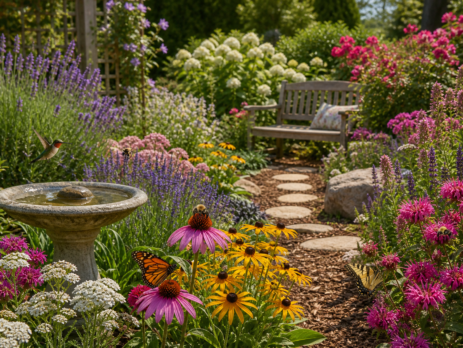
Good pollinator garden candidates often include coneflower, bee balm, salvia, milkweed, black-eyed Susan, catmint, yarrow, butterfly bush, lantana, verbena, and flowering herbs like lavender, thyme, and oregano.
The goal is not to buy every pollinator plant available. The goal is to create a balanced mix that blooms across the season and fits your space.
Make the Garden Safer for Wildlife
A pollinator paradise should also be a low-stress place for beneficial insects. Use healthy soil, mulch properly, water deeply, and avoid spraying when pollinators are active. If pest issues appear, ask our team about targeted, pollinator-conscious solutions.
You can also add a shallow water source with stones for landing, leave some seed heads standing in fall, and keep a few natural areas for overwintering insects.
Make It Beautiful for People, Too
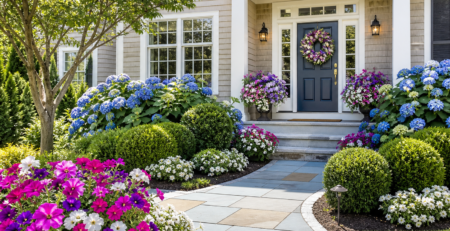
Pollinator gardens can be tidy, colorful, and designed. Edge the bed, repeat colors, vary plant heights, and place taller plants toward the back. Add a bench, birdbath, decorative container, or pathway to make the space feel intentional.
When planned as a project, a pollinator garden becomes more than a seasonal display. It becomes a garden with movement, sound, color, and purpose.
Visit Nunan’s Garden Center to choose plants for your pollinator paradise, or download our app for garden updates, seasonal tips, and special offers: https://apjl.app/nunans.
FAQ
How much sun does a pollinator garden need?
Most pollinator plants prefer at least 6 hours of sun, though some options will tolerate part shade.
Can I make a pollinator garden in containers?
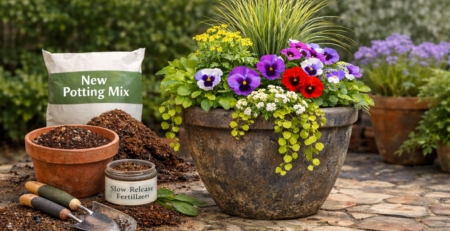
Yes. Use large pots with nectar-rich annuals, herbs, and compact perennials.
When is the best time to plant?
Spring and fall are ideal, but container-grown plants can be added through the growing season with proper watering.
Do pollinator gardens attract pests?
They usually attract more beneficial insects, which can help create a healthier garden balance.