Deer-Resistant Garden Planning for Spring
Plant Recommendations & Layout Strategies to Reduce Browsing Damage
If deer pressure is part of gardening in White Marsh and the surrounding 50-mile radius, spring planning needs to be strategic. While no plant is completely deer-proof, thoughtful plant selection and smart layout techniques can significantly reduce browsing damage. A well-designed deer-resistant garden combines plant texture, fragrance, placement, and density to discourage feeding while maintaining strong seasonal color and performance.
Step 1: Start with Deer-Resistant Plant Selections
Deer tend to avoid plants with strong fragrance, fuzzy or coarse textures, and milky sap. Incorporating these varieties creates a solid foundation for spring planting.
Reliable Perennials
-
Lavender
-
Salvia
-
Nepeta (Catmint)
-
Yarrow
-
Coreopsis
-
Russian Sage
Shrubs
-
Boxwood
-
Inkberry Holly
-
Spirea
-
Deutzia
-
Butterfly Bush
Native Options
-
Baptisia
-
Mountain Mint
-
Black-Eyed Susan
-
Aromatic Aster
Many Proven Winners® varieties also offer strong deer resistance while delivering long bloom cycles and dependable structure.
Step 2: Design with Layers and Barriers
Layout plays a critical role in reducing damage.
1. Create a Buffer Zone
Place more deer-resistant plants along the outer edges of beds. Think of these as your first line of defense.
2. Plant in Dense Groupings
Avoid isolated “specimen” plants that are easy targets. Mass plantings create visual fullness and make it harder for deer to single out preferred varieties.
3. Protect Vulnerable Plants Strategically
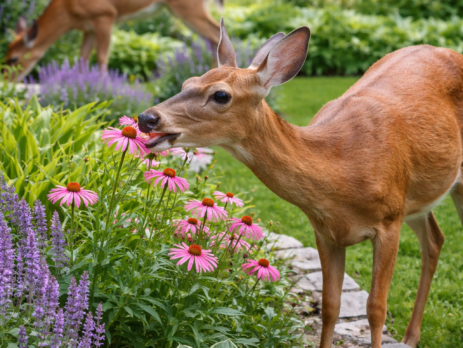
If you want to grow favorites that deer may sample (like hosta or certain hydrangeas), position them closer to the house, near walkways, or inside fenced areas.
4. Incorporate Texture Contrast
Mix fine-textured plants with coarse, aromatic varieties. The varied sensory experience can discourage consistent feeding patterns.
Step 3: Support with Soil & Fertility
Healthy plants recover faster from occasional browsing. Use quality soil mixes and slow-release fertilizers to encourage steady growth. At Maryland Flower & Foliage, we recommend starting spring beds with well-prepared soil and consistent feeding to strengthen root systems early in the season.
Step 4: Consider Supplemental Deterrents
Physical barriers, repellents, and motion devices can provide added protection, especially in early spring when tender new growth is most attractive. Reapplication of repellents is often necessary after rainfall.
Spring Planning Checklist
-
Evaluate high-traffic deer areas in your yard
-
Prioritize deer-resistant perennials and shrubs
-
Mass plant and layer beds thoughtfully
-
Amend soil before planting
-
Apply deterrents proactively
With intentional planning, you can reduce browsing pressure while still creating a colorful, thriving spring landscape.
Visit Maryland Flower & Foliage to explore deer-resistant plant selections and speak with our team about designing a garden that performs beautifully—even in high deer areas.
Frequently Asked Questions
Are any plants completely deer-proof?
No. Deer-resistant means less preferred, not immune. Hungry deer will sample almost anything.
Do deer avoid native plants?
Not necessarily, but many native species have textures and scents that make them less appealing.
When is deer damage most common?
Early spring and late fall, when natural food sources are limited.
Can fertilizer make plants more attractive to deer?
Excessive nitrogen can create tender growth that deer prefer. Balanced, steady feeding is recommended.